
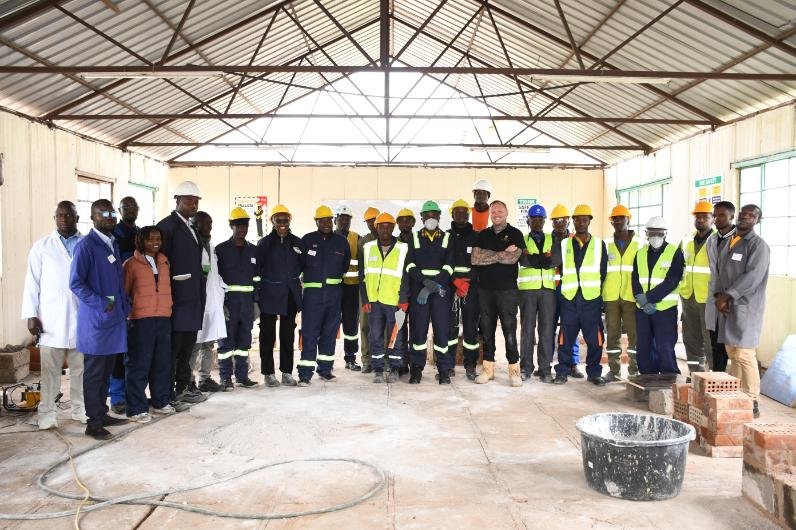
Kabete National Polytechnic hosted an intensive week of competency assessments under the Signet Institute of Australia program, bringing together trainees and trainers from five Kenyan TVET institutions in a significant step towards strengthening skills development and international training standards. A total of 133 trainees, supported by approximately 33 trainers, took part in the assessment program. The participating institutions were;
Kabete National Polytechnic
The Nairobi National Polytechnic
Kisii National Polytechnic
The Eldoret National Polytechnic and
Machakos Technical Training Institute for the Blind.
As part of the program, Kabete National Polytechnic served as the national assessment centre for three key areas: Brick and Block Laying, Ageing and Disability Support, and Diploma in Community Services while The Nairobi National Polytechnic served as a national centre for Light Vehicle Mechanical Technology and Automotive Diesel Engine Technology and The Eldoret National Polytechnic was the national centre for Wall and Floor tiling.
The assessments provided an opportunity for trainees to demonstrate their practical skills, knowledge and competencies in a structured environment aligned with Australian training standards. Rather than focusing solely on theoretical knowledge, the assessment process placed emphasis on what trainees can practically do — an approach that reflects the growing importance of competency-based training in preparing graduates for the workplace.
The presence of Australian Master Trainers from Signet Institute of Australia, working alongside Kenyan trainers and assessors, further strengthened the process. Their engagement provided opportunities for professional exchange, sharing of expertise and exposure to international approaches to competency assessment.
At Kabete, the Brick and Block Laying assessments provided trainees with an opportunity to demonstrate practical construction skills, while those undertaking Ageing and Disability Support were assessed on competencies relevant to supporting individuals with diverse care and support needs. The Diploma in Community Services assessment similarly focused on the practical application of knowledge and skills required within community service settings.
The week-long exercise was demanding, requiring preparation and close coordination among trainees, trainers, assessors and institutional teams. It also demonstrated the capacity of Kenyan TVET institutions to host and participate in assessments benchmarked against international standards. For the trainees, the assessment was more than an examination. It was an opportunity to put their training into practice, demonstrate their competence and gain experience within an assessment framework connected to international qualifications. The program provided valuable exposure and an opportunity to strengthen assessment practices, trainer capacity and collaboration across the Kenyan TVET sector.
The successful completion of the assessments at Kabete National Polytechnic marks another important milestone in the ongoing collaboration with Signet Institute of Australia and reinforces the role of international partnerships in expanding opportunities for Kenyan trainees and positioning TVET graduates for a changing global labour market.