
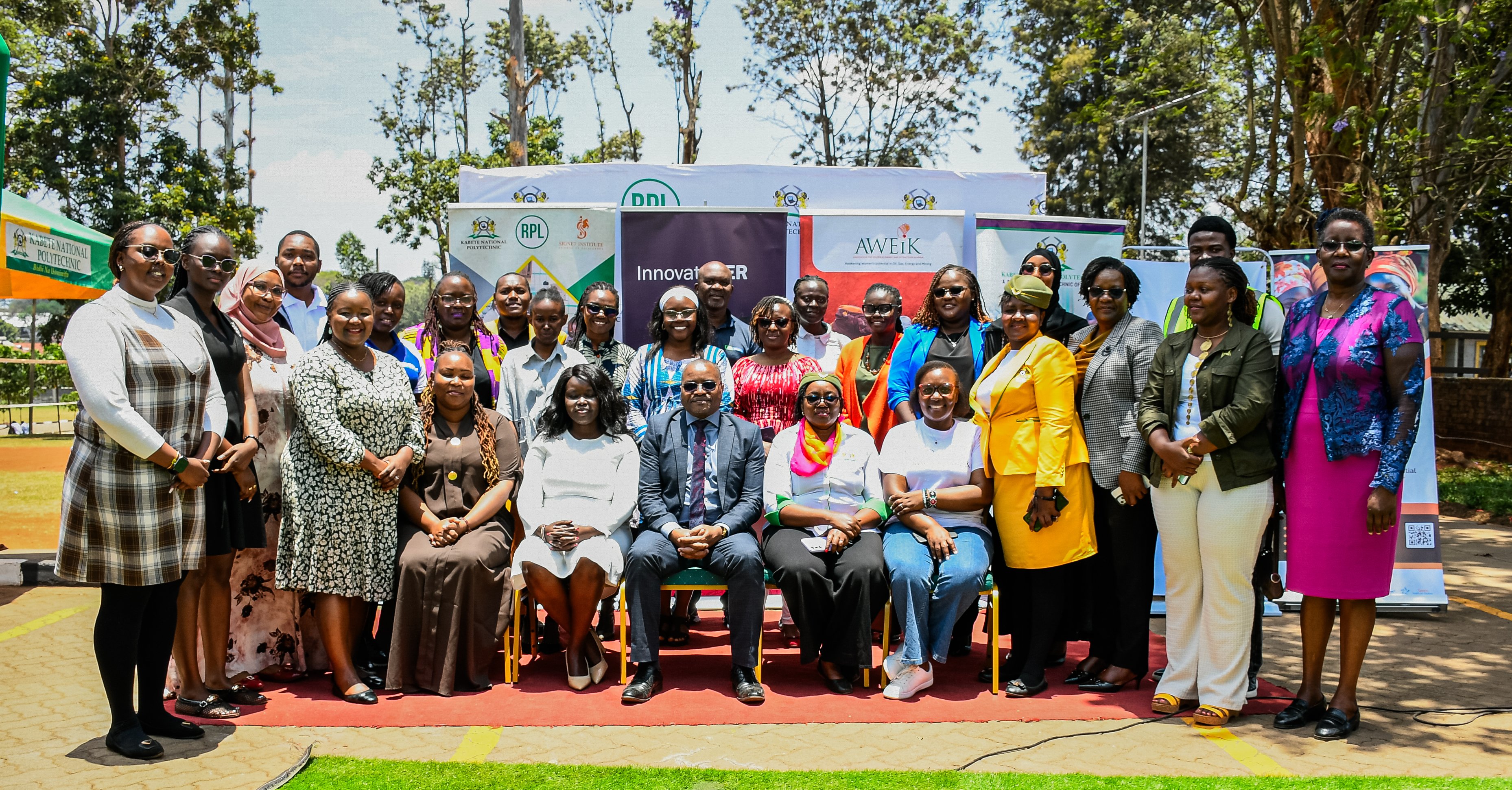
Kabete National Polytechnic Hosts InnovateHER Career Connect 2026 to Empower Young Women in Technical Careers
A young woman pursuing a career in engineering, construction or technology should never have to question whether she belongs. Yet, for many young women, the journey from the classroom to the workplace comes with challenges that go beyond acquiring technical skills. Limited industry exposure, a lack of professional networks and persistent gender stereotypes can make the path to a successful career difficult to navigate.
This year, Kabete National Polytechnic was privileged to host InnovateHER Career Connect 2026 on 25 September 2026, bringing together young women, industry representatives, mentors and education stakeholders under the theme “Empowering Young Women for Careers in Construction, Engineering, Technology and the Green Economy.”
The event, held in partnership with InnovateHER Kenya, created a platform for young women to connect their technical training with real-world career opportunities, while encouraging them to envision themselves not only as skilled professionals, but also as innovators, entrepreneurs and future leaders.
The gathering was graced by Principal Secretary, State Department for TVET, represented by Secretary, State Department for TVET Eng. Joseph Njau, InnovateHER officials and the management of Kabete National Polytechnic, alongside young women whose aspirations and ambitions were at the heart of the occasion.
For many trainees, completing a course is only the beginning. Finding an industrial attachment, securing a first job, building professional relationships or establishing a business can be an entirely different challenge. The gap between training and employment is what InnovateHER Career Connect seeks to address. The initiative recognizes that while more young women are pursuing technical education, some encounter obstacles as they transition into industry and seek opportunities for professional advancement. This gradual loss of participation along the career pathway is often described as the “leaky pipeline.”
Through career conversations, mentorship, industry engagement and practical career guidance, the forum aimed to help participants better understand the opportunities available to them and the steps required to pursue them. The event also reflected a broader need for stronger collaboration between training institutions, employers, government agencies and professionals. By bringing these groups together, the initiative seeks to build lasting connections that can support young women long after they leave the training environment.
In her address on behalf of Kabete National Polytechnic, Gender Mainstreaming representative, Ms. Monday Wa-Kyendo reaffirmed the institution's commitment in mentoring and empowering girls and young women through Women in Technical Education (WITED). “Technical education must offer more than a qualification. It must also give young women the confidence, mentorship and opportunities to build meaningful careers. At Kabete National Polytechnic, we believe that a girl should not have to choose between being a woman and being a technician, engineer, innovator, entrepreneur or leader. She can be all these things,” she stated.
The address outlined five key areas through which the Polytechnic has continued to strengthen its support for female trainees: career mentorship, industry exposure, skills and employability, leadership and innovation, and an inclusive institutional culture.
These commitments recognize that preparing young women for the world of work involves both technical competence and the ability to communicate, solve problems, lead teams, embrace digital skills and identify opportunities for entrepreneurship.
The main message of the convention was the importance of seeing what is possible for young women entering technical fields, hearing from professionals who have navigated similar challenges and provide valuable insights into career choices, workplace expectations and personal growth.
The Career Connect framework has been built around five stages: Inspire, Discover, Connect, Prepare and Take Action. From learning about diverse career pathways and meeting potential mentors to developing workplace readiness and exploring opportunities for internships, apprenticeships and entrepreneurship, the approach has been designed to turn conversations into practical steps.
For the young women in attendance, this approach offered an opportunity to look beyond their immediate courses of study and consider the many directions their skills could take them, particularly in construction, engineering, technology and the green economy.
Perhaps the most personal part of the address was the message directed to the young women themselves. They were encouraged to pursue their ambitions without allowing traditional gender expectations to determine the careers they could enter.
“Do not allow stereotypes to determine the size of your dream,” Wa-Kyendo urged.
She encouraged aspiring engineers to pursue their ambitions, those interested in construction to step forward, and young women drawn to technology to continue learning, innovating and creating. She also challenged them to seek mentors, build professional networks and, when they succeed, reach back to support other young women. The message extended beyond individual achievement. It was a reminder that progress becomes more meaningful when women who have found their footing help others find theirs.
While encouraging young women to take ownership of their career journeys, the Polytechnic also called on employers, professional bodies, government agencies and development partners to become active participants in creating opportunities. Wa-Kyendo urged industry stakeholders to open their workplaces to young women, provide internships and apprenticeships, offer mentorship and share their expertise to support professional development. This partnership between education and industry is essential to helping trainees gain practical experience, understand employer expectations and develop the networks that can support their transition into employment.
For Kabete National Polytechnic, the convention was therefore more than a one-day gathering. It was an opportunity to strengthen relationships and encourage sustained collaboration that can lead to meaningful opportunities for its trainees and those from neighbouring TVET institutions.
InnovateHER Kenya, an initiative of Edsource Africa, was officially launched in March 2025 by Dr. Esther Thaara Muoria, Principal Secretary, State Department for TVET and focuses on strengthening the participation, progression and advancement of girls and young women in STEM, TVET and technical careers. By hosting Career Connect 2026, Kabete National Polytechnic reaffirmed its commitment to working with partners to strengthen the pathways between technical education and the world of work. The success of this commitment will ultimately be reflected in the opportunities young women can access, the careers they build and the leadership roles they take up in their industries and communities.
As the convention concluded, the message remained one of shared responsibility: young women must be encouraged to pursue their ambitions, institutions must nurture their potential, and industry must help create pathways for them to enter, remain and advance in technical careers. When a young woman is given the skills, confidence, mentorship and opportunity to succeed, she does more than build a career. She helps shape the future of her industry and opens doors for the next generation.
Through WITED and its partnership with InnovateHER Kenya, Kabete National Polytechnic remains committed to nurturing that journey, ensuring that every talented girl has the opportunity to learn, innovate, lead and make her mark.